
Illinois VINELink Custody Coverage
Illinois VINE is the state’s free, confidential custody and criminal-case notification system accessed through VINELink. The Illinois Attorney General says it interfaces with county jail booking systems, the Illinois Department of Corrections, the Illinois Department of Human Services, and circuit clerks throughout the state. That makes it a broad cross-agency channel, but not a permanent archive of every release.
The Illinois Attorney General VINE overview is captured below. It is the official state source for the system’s Illinois scope and help line.
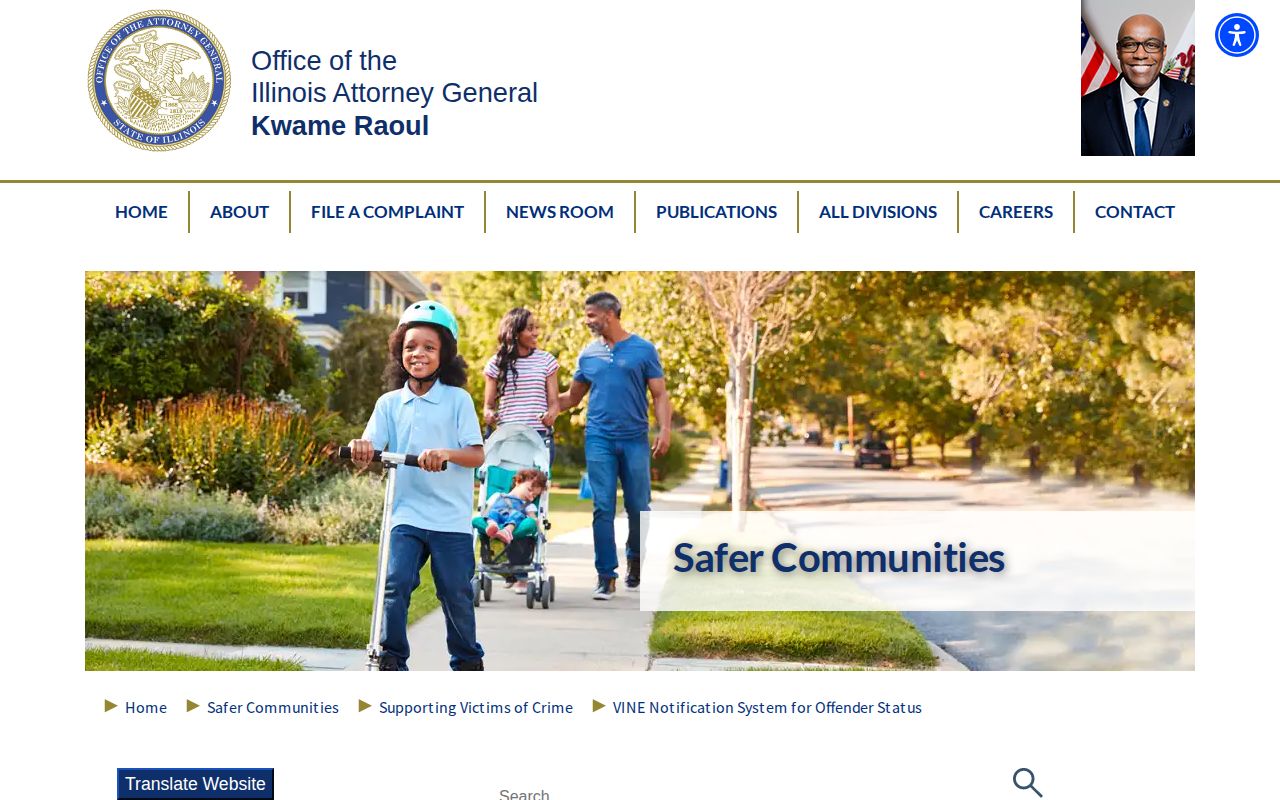
The overview connects users to VINELink and identifies Illinois help at 1-866-5-NOTIFY, also written as 1-866-566-8439.
A person may have more than one relevant record. A county booking feed addresses a jail custody episode. An IDOC feed addresses a state correctional case. A circuit-clerk feed can concern court-case status. Always note the agency named on the result before interpreting a release date or status.
Search Illinois VINELink Records
Search for one person at a time and use the strongest identifier available. A name-only query can return several people. Date of birth, custody identifier, county, agency, or facility details can help separate them when the result provides those fields. If the person was held in a county jail, identify the county that operated or hosted the jail. A person’s home county may not own the record.
The VINELink search and registration interface appears in the captured screen. Its state selection and record workflow are the official access point for Illinois VINE.
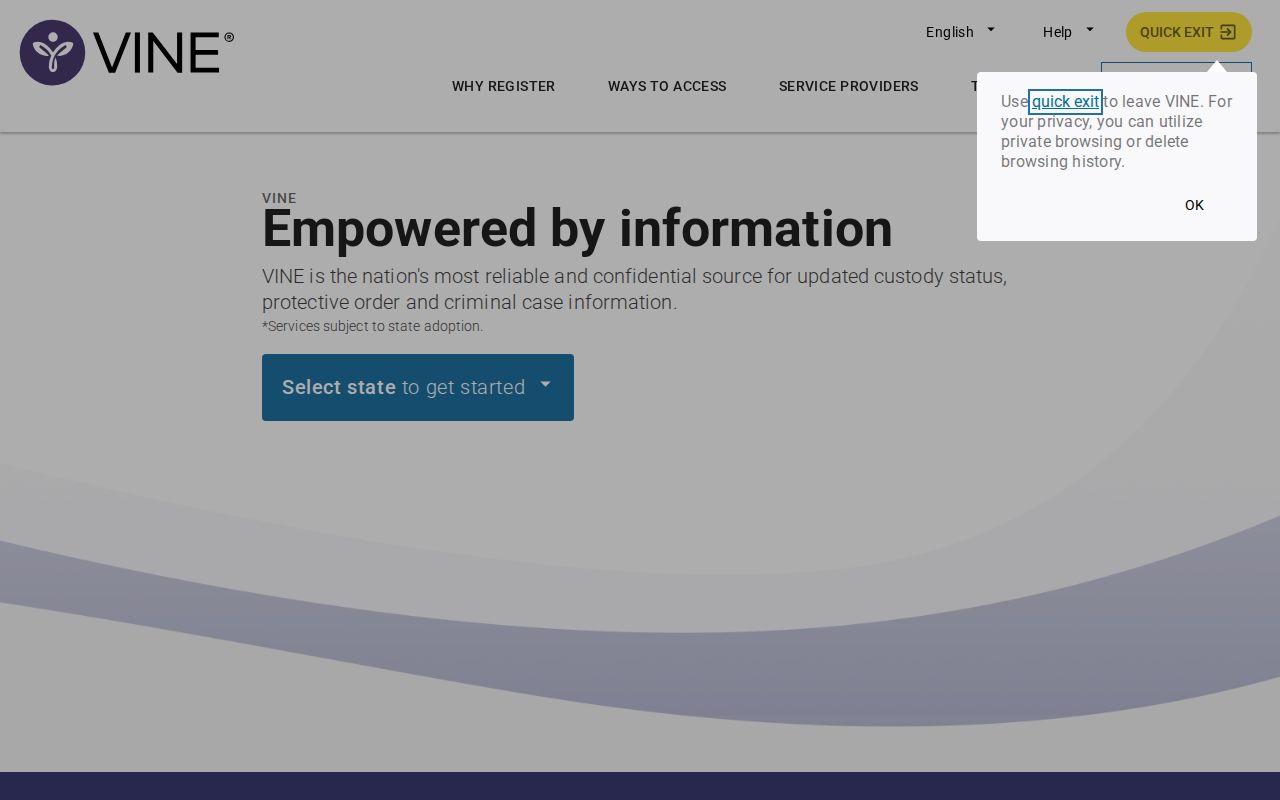
Select Illinois first, then choose the relevant offender-custody or court-case path. The agency attached to the match determines what the status covers.
- Open VINELink and select Illinois.
- Choose offender custody or court-case status based on the event being checked.
- Enter the person’s name or available identifier.
- Compare all supplied identity fields and the reporting agency before opening a result.
- Read the status and event details, then preserve the agency name and the time checked.
For local jail routing, the Illinois County Directory points to the county source that can confirm the custody episode. That county may also provide a current roster, a release record, or a records-request route.
Note: Select the reporting agency before relying on a match because the same name can appear in more than one Illinois system.
Illinois VINELink Release Fields
VINELink is built for current status and event notice. Depending on the supplying Illinois agency and record type, a result can identify the person, custody status, reporting agency, and facility or location. A sentenced record may display a release-related date. A court feed can report a case event instead of a jail movement. Field availability is not uniform across all local sources.
| Field | How to read it |
|---|---|
| Name and identifier | Use both to separate people with similar names |
| Reporting agency | Shows which jail, state agency, or court supplied the record |
| Custody status | Describes the source agency’s current reported status, not every possible system |
| Facility or location | Identifies the reporting custody location when supplied |
| Release-related date | May be scheduled, projected, or tied to an event, so verify its label |
| Notification options | Shows which alert methods are offered for that record |
“Released” means release from the reporting agency’s custody. It does not by itself show that supervision ended or that no other agency assumed custody. A county-jail release can be a transfer to IDOC. An IDOC release can begin mandatory supervised release. A court event may not describe physical custody at all.
Register Illinois Release Alerts
After selecting the correct Illinois VINE record, register only for the events offered on that record. The Attorney General identifies email, text, phone, and mobile-app channels. IDOC states that VINE can provide notice of release, transfer, escape, death, and an out-to-court appearance. The options shown can depend on the source record and the contact method selected.
- Open the verified person record and choose the registration or notification option.
- Select the custody or court changes that matter for the record.
- Enter the phone number, email address, text contact, or app method requested by the interface.
- Complete any confirmation or PIN step shown and keep that information private.
- Save the registration confirmation and keep the supplying agency’s direct contact available.
Illinois law protects registrants’ names, contact information, PINs, and email addresses within the VINE framework. Do not share a PIN or confirmation data. If an alert channel changes, return to the official record and update the registration through the prompts offered there.
Question: Is a release alert final proof of the release terms? No. It is a prompt to contact the source jail, IDOC, or court for the exact event, date, type, and destination.
Illinois VINE Participation Rules
Illinois VINE has a statewide name, but its governing law creates different duties for state and local sources. Under 725 ILCS 120/8.5, IDOC, the Department of Juvenile Justice, the Department of Human Services, and the Prisoner Review Board must cooperate. State’s Attorneys, circuit clerks, and local law-enforcement or correctional authorities may participate through agreements.
That structure supports a careful conclusion: local coverage and timing can vary. It does not support naming any county as a nonparticipant without separate proof. A missing result might reflect search inputs, a feed delay, the custody system chosen, or local participation. Use the source county or agency to resolve the gap.
Public Act 104-11 also called for an Attorney General internal review of timely statewide notification, with recommendations due July 1, 2026. No resulting report was located as of August 12, 2026. The absence of a located report is not a finding about whether it exists or what it says.
Confirm Illinois Prison Releases
For a state-prison case, compare the VINE alert with the IDOC public profile. The profile may show PAROLE, a parole-district location, an actual Parole Date, and a later Projected Discharge Date. These fields separate departure from the institution from the later end of supervision. A current institutional profile instead can show IN CUSTODY and a Projected Parole Date.
The IDOC FAQ on search records and release information appears in this captured page. It explains that public records generally stop displaying after completion of the sentence and parole.
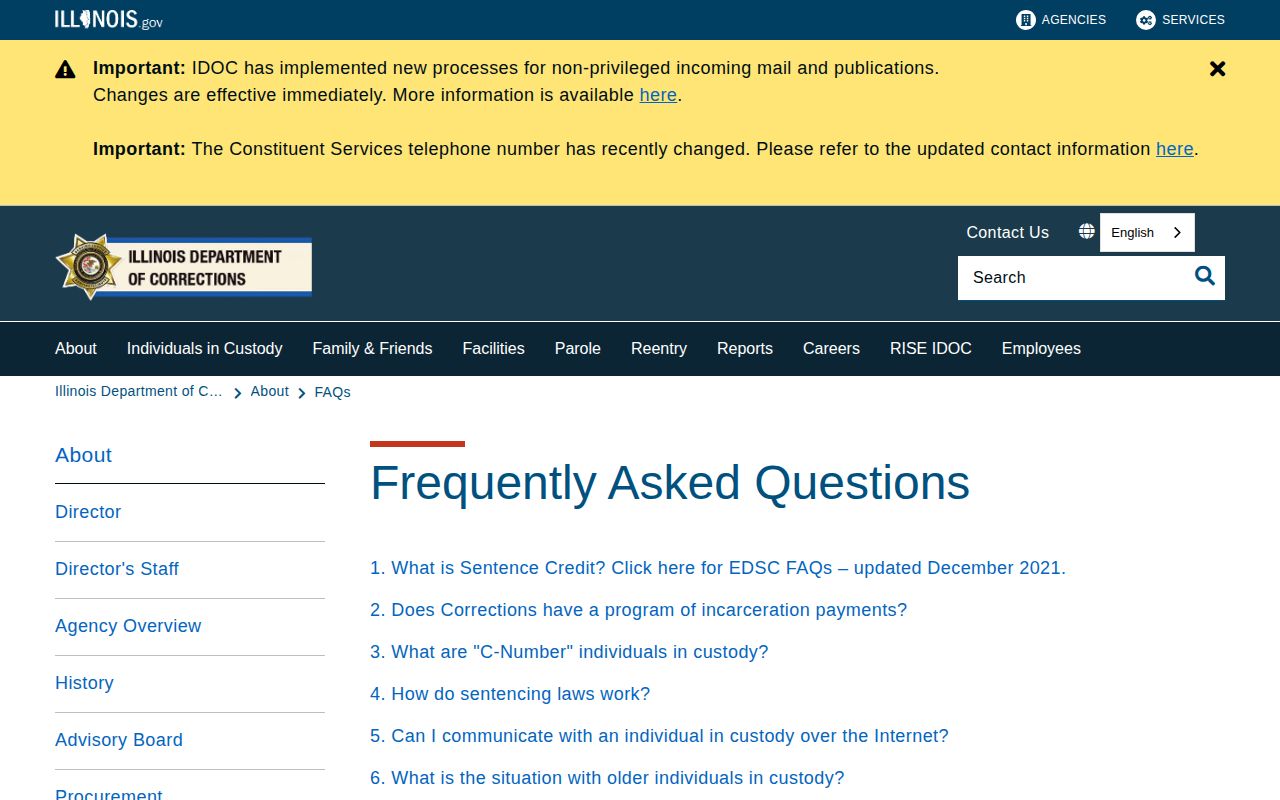
A fully discharged person may therefore be absent from the IDOC search. Use IDOC Record Search or FOIA for an older record instead of treating no result as proof of no history.
Record the alert time, exact wording, agency, and any identifier. Then verify the official profile or order. If multiple sentence rows appear, one row may be discharged while another remains active.
VINELink Federal Custody Limits
VINELink is not the Federal Bureau of Prisons locator. For a federal case, use the BOP search, generally covering records from 1982 forward. It accepts a BOP register number in the form #####-### or other offered identifiers, plus a name search with filters. Results can show name, register number, age, race, sex, release date, and location.
The BOP inmate locator shown here is the correct federal route, not an Illinois VINELink substitute.
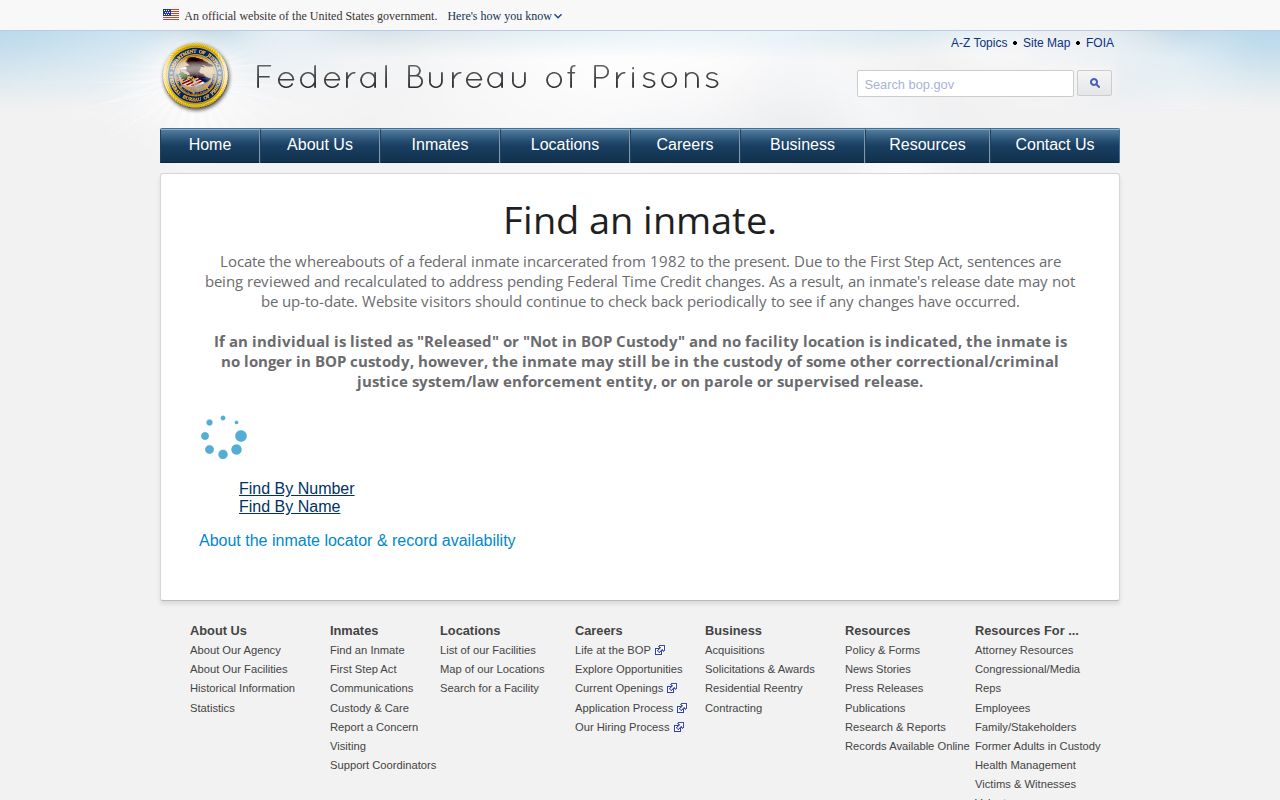
BOP says a past release date with no facility, or a location marked RELEASED, means the person is no longer in BOP custody. It does not prove the person is outside every justice system.
ICE has a separate Online Detainee Locator for current ICE custody or CBP custody lasting more than 48 hours. It is not an Illinois jail-release archive. A failure to locate someone in ICE, BOP, VINE, or IDOC must be evaluated within that tool’s limited scope.
Note: A federal release, an Illinois jail release, and an IDOC parole event belong to separate record systems.
Verify Illinois VINELink Alerts
Every alert should lead back to its source. Contact the reporting county jail for a local booking release, IDOC for a state-prison status, or the Circuit Clerk for a court event. Ask for the exact release date, release type, destination or transfer agency when releasable, and the identifier used in the source record. A saved notification is useful, but an agency record is more durable.
If a result disappears, repeat the search with spelling variants and the best identifier. Check whether the person transferred between systems. The broader Illinois released-inmates lookup lays out the county, state, court, federal, and immigration routes for cases that do not resolve in one portal.
VINELink does not promise a permanent historical release archive. Data can lag, projected dates can change, and local fields can differ. Use the system for current checks and notices, then obtain the originating record when the exact event must be documented.
Illinois VINELink Court Notices
Illinois VINE can also connect with circuit-clerk case information, so a result may describe a court event rather than a jail release. Keep those channels separate. A court notice can help track a case, but it does not by itself state that the person physically left a facility. The custody feed and the court file may update at different times.
For a trial-level disposition, use the official Illinois Courts route to locate the proper Circuit Clerk. Statewide re:SearchIL access is not a complete public criminal-disposition name index for all 102 counties. Remote access excludes restricted, sealed, expunged, impounded, and confidential material, and courthouse access can be broader than remote access.
When a court alert and a custody alert seem to conflict, compare the event timestamps and source agencies. A release order may precede actual processing. A person may also leave one agency through transfer rather than community release. Ask the clerk for the order and the jail for the custody event.
Preserve Illinois Release Alerts
Keep enough context to verify a notification later. Save the person identifier, reporting agency, event label, date and time received, and the method used. Do not record or share another registrant’s private contact data or PIN. If the alert reports a projected event, mark it as projected rather than rewriting it as an actual release.
A direct agency check should follow promptly. For an Illinois county jail, ask whether the event was release, bond, transfer, court movement, or another exit. For IDOC, compare Offender Status, Location, Parole Date, and Projected Discharge Date. For a court notice, obtain the order or docket entry when the precise disposition matters.
This short record trail helps reconcile later updates. It also preserves which agency made the first report. VINELink can deliver the notice, while the jail, IDOC, or court supplies the durable source record.
Public Record Search
Sponsored Results