
Illinois Parole and Probation
Parole and probation do not come from the same source. An Illinois prison release can lead to parole or mandatory supervised release, often shortened to MSR. The Illinois Department of Corrections keeps legal custody during that supervision. Its older public search vocabulary may display PAROLE even when current law calls the release MSR. A profile may also list a parole district, an actual Parole Date, and a later Projected Discharge Date. Those fields show that the person left the prison institution but has not yet reached the end of the IDOC commitment.
Probation is a court sentence or court-ordered term administered through local departments. Illinois Courts reports that 70 single-county or multi-county departments across 25 circuits supervise more than 100,000 people. IDOC does not provide one combined public name search for both systems. Start with the sentencing case. If the judgment says probation, use the county probation department. If the record shows commitment to IDOC followed by release, use the corrections profile and parole contacts.
State totals provide context but cannot verify one person. IDOC reported an adult parole population of 15,372 on December 31, 2025, down from 15,958 one year earlier. Those figures describe the agency’s statewide caseload at two points in time. They do not identify who was discharged between those dates, and they do not include the separate county probation population. Person-level verification still depends on the correct IDOC profile, court case, and office record.
| Point | Parole or MSR | Probation |
|---|---|---|
| Authority | IDOC and the Illinois Prisoner Review Board | The sentencing court and local probation department |
| How it begins | Release from an IDOC institution under supervision | A court order, often without an IDOC prison release |
| Public starting point | IDOC offender profile and parole district | Court case and official county department directory |
| How it ends | Expiration or a PRB final-discharge order | Court completion or discharge reflected in local records |
- Mandatory supervised release
- A period of IDOC supervision after an eligible prison term.
- Probation
- A court-controlled sentence supervised by a local probation department.
- Discharge
- The end of the specific sentence or supervision commitment, not merely departure from a facility.
- Absconder
- A person an agency alleges has stopped reporting or cannot be located under required supervision procedures.
Verify Illinois Post-Release Supervision
A reliable Illinois parole and probation check uses more than a name. Collect the full name, date of birth, IDOC number if one exists, sentencing county, and case number. A common name can match more than one record. The IDOC number is the clearest key for a prison record, while the court case number is the better key for probation. A person missing from a current jail roster may have left custody, moved to IDOC, or transferred elsewhere, so roster absence alone does not establish supervision status.
The official IDOC Individual in Custody Search is the first visual checkpoint for a state-prison release. The captured landing screen identifies the agency search used for current incarceration and parole records.
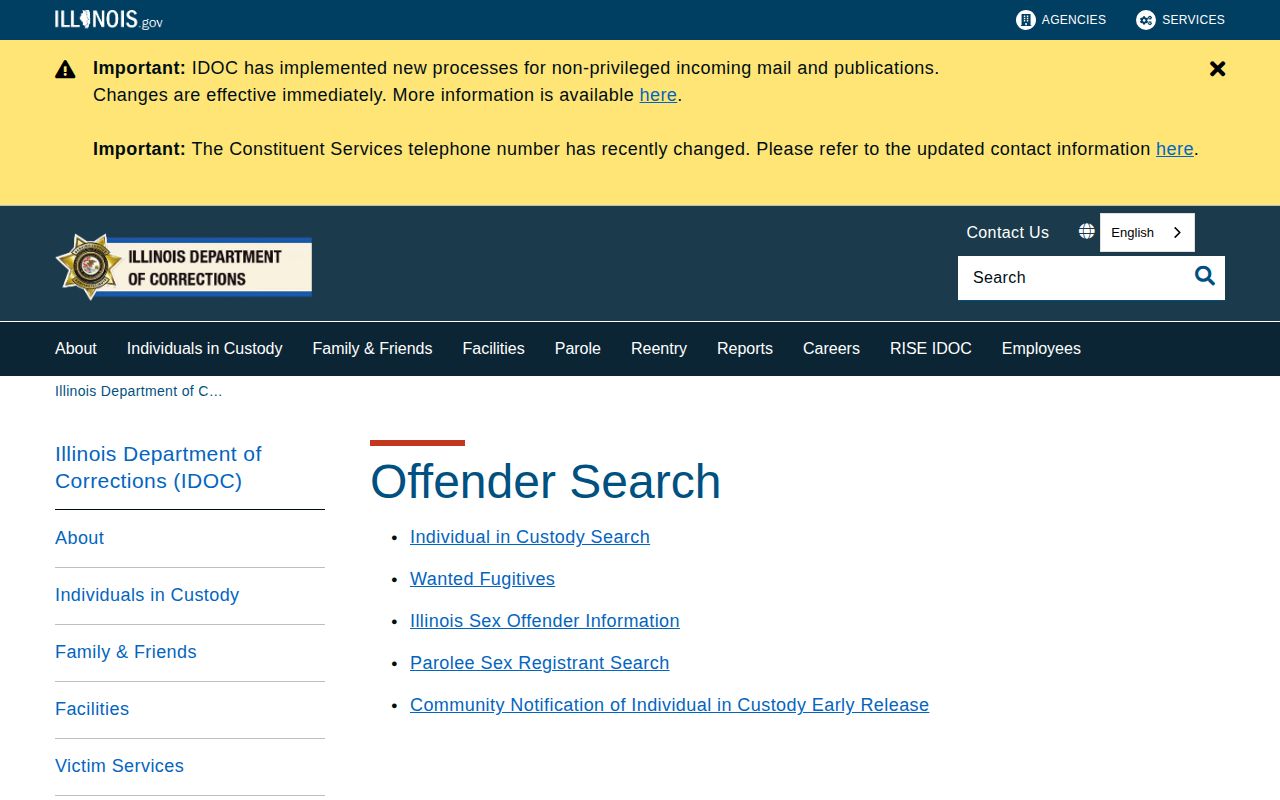
Open a matching profile and read status, location, Parole Date, and Projected Discharge Date together. Do not treat one date as the whole supervision record.
- Identify the custody path from the judgment, jail record, or IDOC number.
- Search IDOC for a prison release, then confirm identity with birth date, county, case facts, and sentence rows.
- If the judgment imposed probation, locate the sentencing county through the official Illinois Courts department directory.
- Contact the listed parole or probation office for current operational information that is releasable.
- For durable proof, request the relevant agency record or court order rather than relying on a saved screen.
The Illinois released-inmates search path explains how to separate county-jail, state-prison, federal, and court records when the custody path is unclear. That distinction prevents a probation case from being mistaken for an IDOC parole case.
Note: A public profile is a starting point, while an agency record or court order supplies the stronger proof of supervision status.
Illinois Parole District Records
An IDOC profile can display Offender Status: PAROLE and a location such as a numbered parole district. In the public interface, that combination signals release from the institution to community supervision. The actual Parole Date marks the prison-exit event. A future Projected Discharge Date points to the expected later end of IDOC authority. Sentence rows must also be checked because one count can say discharged while another remains active.
The legacy IDOC search form shows three entry routes: last name, IDOC number, and birth date. Its captured fields make clear why an identifier search is safer than a broad name match.
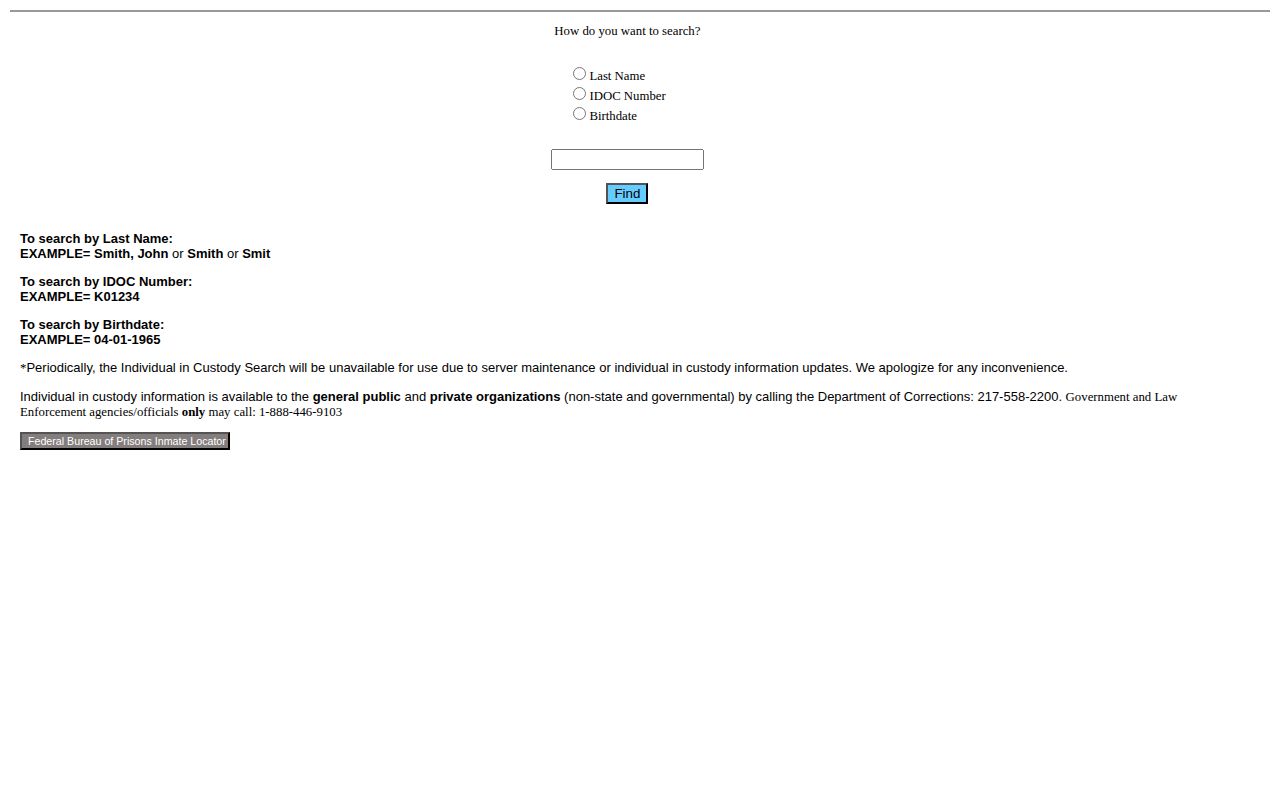
A surname can be entered alone or in a surname and given-name form. The result still needs identity checks against the sentencing county and case details.
If a fully discharged record no longer appears, IDOC says sentence completion may explain the absence. Use the agency’s Record Search route or FOIA process. An empty result does not prove that there was no prison history, no supervision, or no other active case.
Illinois Probation County Route
Illinois probation remains tied to the court that imposed it. The Illinois Courts county department directory routes users to the right office, but it is not a public person-status database. First locate the sentencing county and circuit from the court case. Then use the official entry for that department. A department serving more than one county may have separate sites or contact points, so the court record should control the choice.
The Illinois Courts portal provides the statewide court starting point shown in this capture. Trial-level criminal details can still require the local Circuit Clerk because remote public access is not a complete name index for all 102 counties.
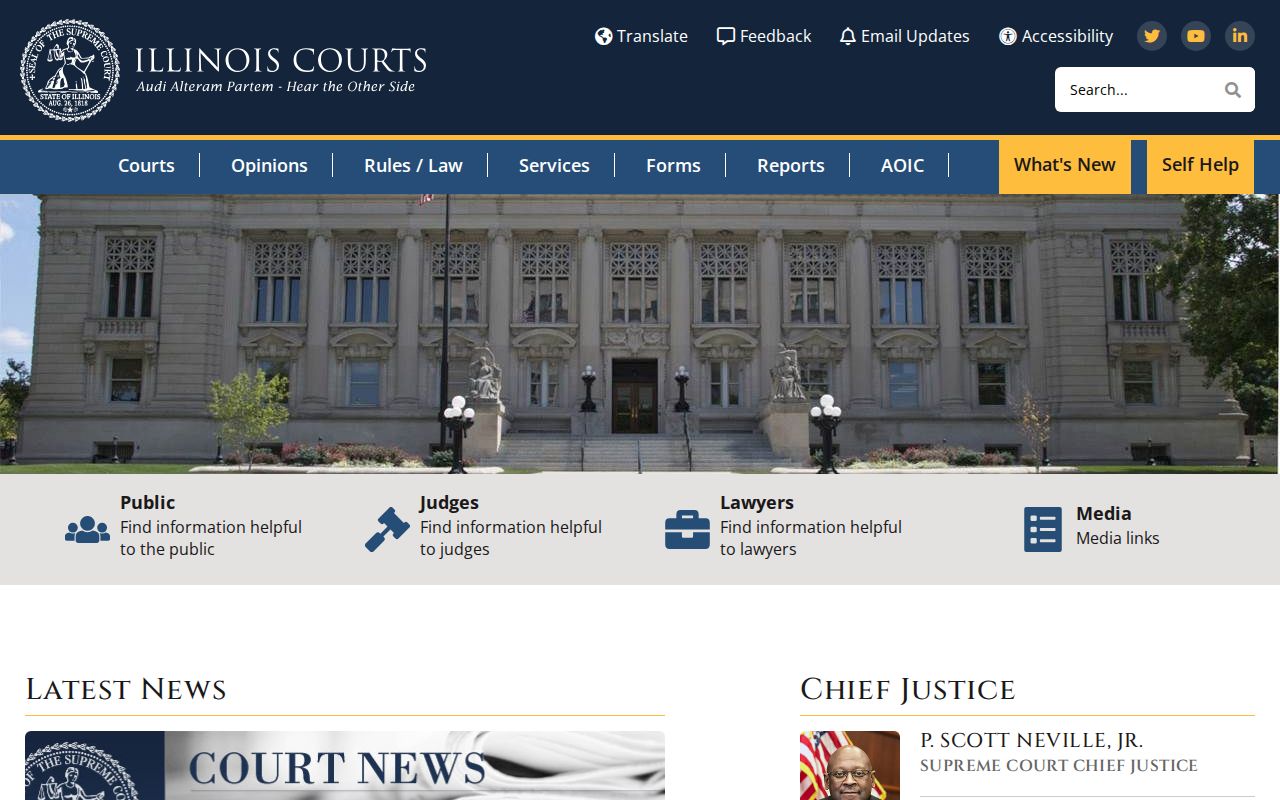
Use the case disposition to confirm that probation was ordered, the term imposed, and whether the court later changed or ended it. The directory itself cannot answer those person-specific questions.
Illinois Supervision Agency Contacts
IDOC Parolee Assistance publishes a central number for parole operations. Constituent Services directs concerns first to the parole supervisor for the person’s area. If the matter is not resolved there, the central constituent channel is the next route. Probation questions go to the county department named in the court directory, not to the Prisoner Review Board.
IDOC Parolee Assistance
Statewide operational routing
800-666-6744
IDOC parole assistance
IDOC Constituent Services
Escalation after contact with the area parole supervisor
217-558-2200
DOC.Constituent.Services@illinois.gov
Constituent Services
The Illinois Prisoner Review Board sets or reviews key release conditions and handles specified discharge and revocation matters. It does not replace the parole officer’s operational role or a county probation department’s court-based work.
Illinois Supervision Violations
Illinois law authorizes conditions for parole and MSR, but the precise terms come from the person’s order and applicable statutes. A claimed violation can lead to agency review and PRB proceedings. It does not prove that supervision ended. A preliminary revocation hearing may return the person to release status with or without changed conditions, find no violation and allow return after IDOC approves a release plan, or revoke release so IDOC calculates a new date.
The PRB revocation-results directory is shown in the captured page. It organizes dated result files, not a permanent statewide person-name search.
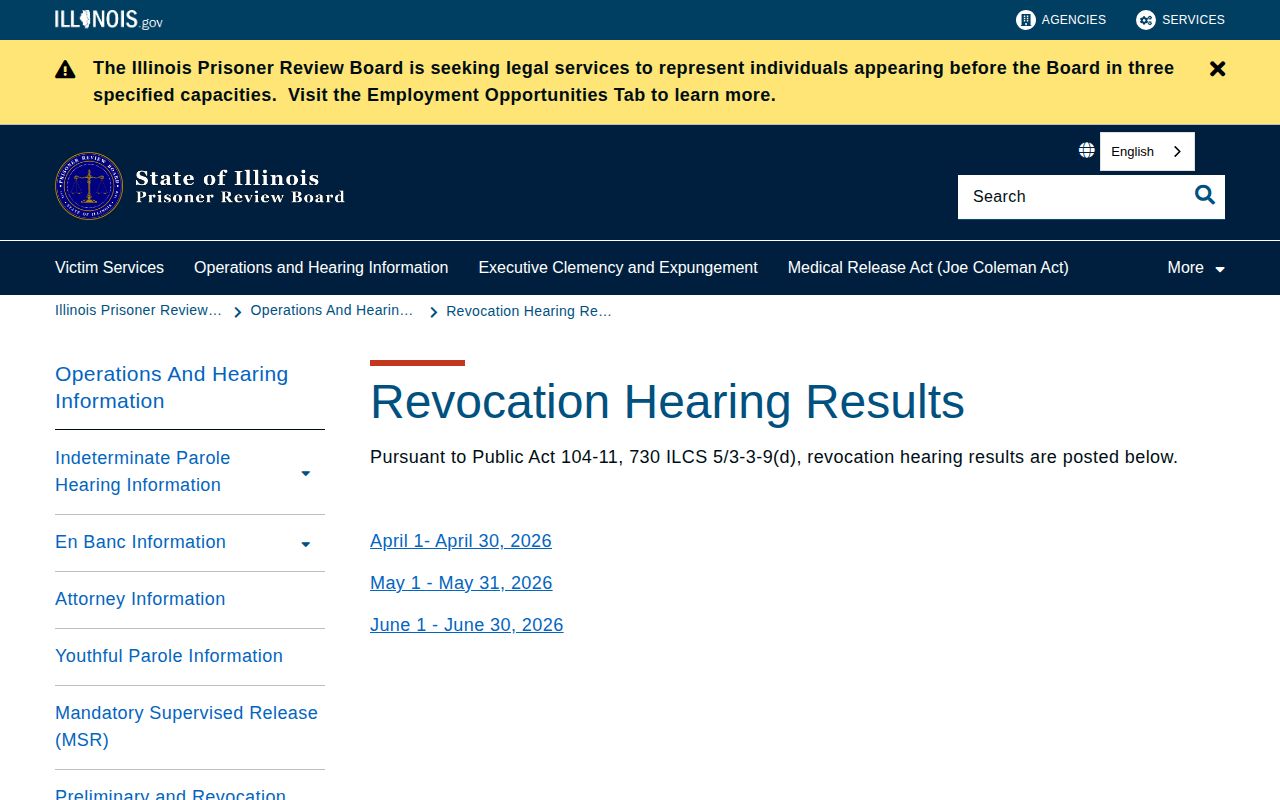
Use the dated result with the IDOC profile and any later order. A hearing listing by itself does not establish reincarceration, release, or final discharge.
No authoritative statewide public absconder or warrant name list was found in the research. IDOC’s case-management directive describes internal contact efforts, LEADS checks, and warrant-request steps. Those internal processes do not support an inference that no warrant exists merely because no public page appears.
Note: A supervision violation, a revocation finding, and a new custody date are separate events that may appear in different records.
Illinois Release Is Not Discharge
A person can leave an Illinois prison and remain in IDOC legal custody on MSR or parole. The Illinois Prisoner Review Board may later order early or final discharge when the statutory standard is met. Under 730 ILCS 5/3-3-8, the order takes effect when entered. The clerk of the committing court then records the sentence and commitment as satisfied. That later act differs from the Parole Date shown at the start of supervision.
The PRB early final-discharge process considers risk and needs information, compliance, victim statements, treatment or programming, public safety, case factors, and the Parole Division recommendation. The detailed hearing and decision channels are covered in the Illinois Parole Hearings resource.
IDOC policy refers to a Discharge Letter routed through its internal Offender 360 system, but no public certificate repository was found. A requester can seek a releasable PRB order or IDOC discharge record. PRB accepts FOIA requests by email at PRB.FOIA@Illinois.gov or through its FOIA Officer at 1001 North Walnut Street, Springfield, Illinois 62702.
Question: Does a Parole Date prove the sentence ended? No. It proves the recorded move from an IDOC institution to supervision. The Projected Discharge Date or an entered discharge order addresses the later endpoint.
Request Illinois Supervision Records
A records request should name the document, not ask an agency to decide whether someone is on supervision. Illinois FOIA generally requires a public body to comply or deny within five business days, subject to the extensions allowed by law. The agency need not research a question or interpret its records. A focused request is more useful: identify the person, IDOC or case number, sentencing county, relevant date range, and the specific parole order, discharge order, status record, or releasable supervision document sought.
Send an IDOC request to DOC.FOIARequest@illinois.gov or the Freedom of Information Act Officer, 1301 Concordia Court, P.O. Box 19277, Springfield, IL 62794-9277. The office lists 217-558-2200 extension 4166 and fax 217-558-5612. IDOC states that the first 50 standard black-and-white pages are free, with later pages priced at up to $0.15 each. Asking for electronic delivery can avoid paper-copy costs.
PRB records belong with the Board. Its FOIA channel can address releasable hearing, revocation, or discharge documents. Probation records belong with the sentencing court or county probation department. The public body may redact or withhold protected material under an applicable exemption, but a requester can ask for all nonexempt portions. A written denial should identify its factual and legal basis and explain review rights.
Keep the request narrow enough to locate one custody or supervision episode. Useful terms include the admission date, Parole Date, projected or final discharge, hearing month, committing court, and order type. A request for “everything” may be harder to process and can obscure the exact proof needed. Save the request, response, and produced record together so later status changes do not erase the chain of dates.
Public Record Search
Sponsored Results